
Siding Contractor Serving New Hampshire
We install and replace siding across central and southern New Hampshire — vinyl, fiber cement, and CertainTeed that hold up to NH winters. Free written estimates, and permits handled.A&E Home Improvement installs and replaces siding on homes throughout central and southern New Hampshire. We work with vinyl, fiber cement, and CertainTeed products — materials that actually hold up to NH winters, not just look good on the day they're installed. Free written estimates, permits handled, and anything we find behind the old siding gets priced before we touch it.
How We Work
Free On-Site Estimate
We come to your home to assess the current siding, check for any rot or moisture damage behind the boards, and measure the project. You get a written estimate with line-item pricing before anything starts.
Material Selection
We'll walk you through your options — vinyl profiles, fiber cement, color selection — and explain what each choice means for long-term maintenance and cost in NH's climate.
Tear-Off and Substrate Inspection
Old siding comes off and we inspect the sheathing underneath. If we find rot or moisture damage, we tell you immediately — with a photo and a cost to address it — before we proceed.
Installation
New house wrap, trim, and siding installed to manufacturer specs and NH building code. Starter strips, J-channel, corner posts, and all trim are included — not add-ons.
Final Walkthrough and Cleanup
We walk the project with you before we call it done. All debris is removed, the site is left clean, and we hand you the manufacturer warranty documentation.
What siding costs in New Hampshire
Most NH homes carry roughly 1,500–2,500 square feet of siding area. Trim, corner boards, and soffit/fascia are part of the job, not extras.
| Option | Typical NH range |
|---|---|
| Vinyl (CertainTeed)Handles freeze-thaw, won’t rot, near-zero maintenance. Good quality vinyl lasts 25–40 years here. | $5–9 per sq ft |
| Fiber cement (CertainTeed)Dimensionally stable in cold, fire resistant, paintable. Repaint every 5–10 years. | $10–18 per sq ft |
| Cedar and premium profilesFor lake homes and historic exteriors where appearance leads the decision. | $16–24 per sq ft |
Ranges as of , not quotes. Every home is different, and yours could land outside these numbers — we price the actual project after we walk it with you.
Siding Projects in New Hampshire
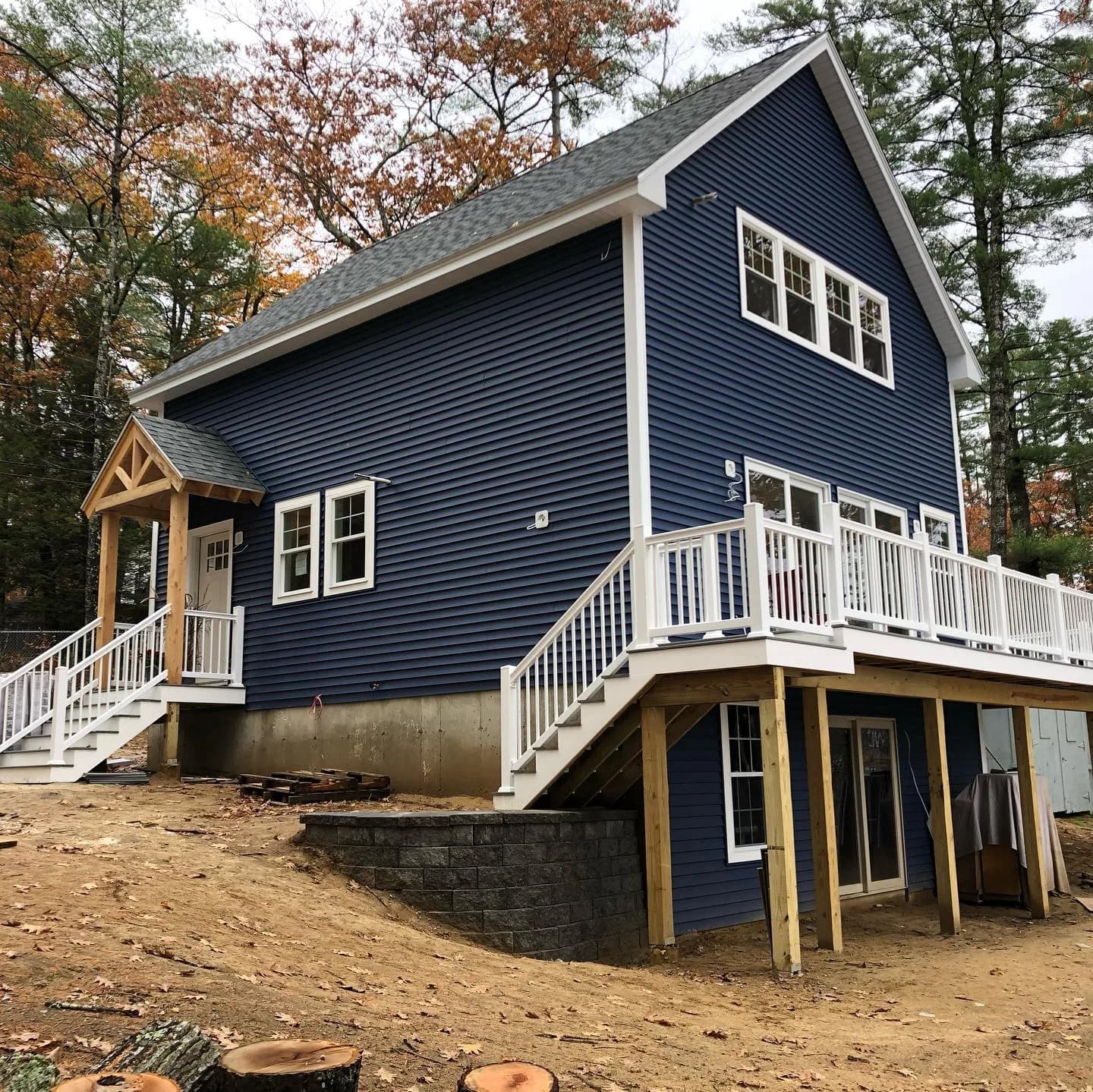
Blue home with wraparound deck
Lakes Region, NH
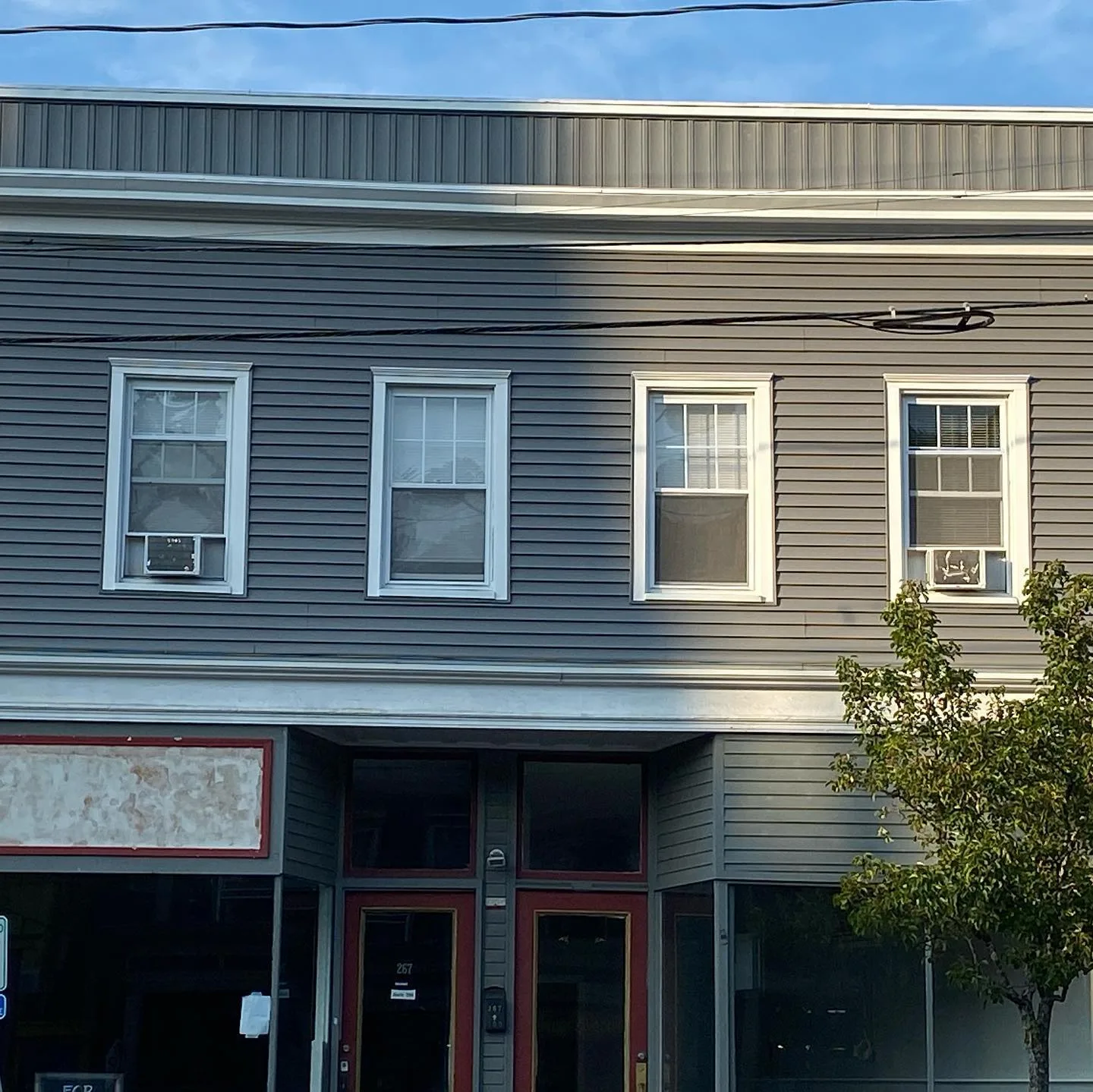
Blue colonial
Southern NH
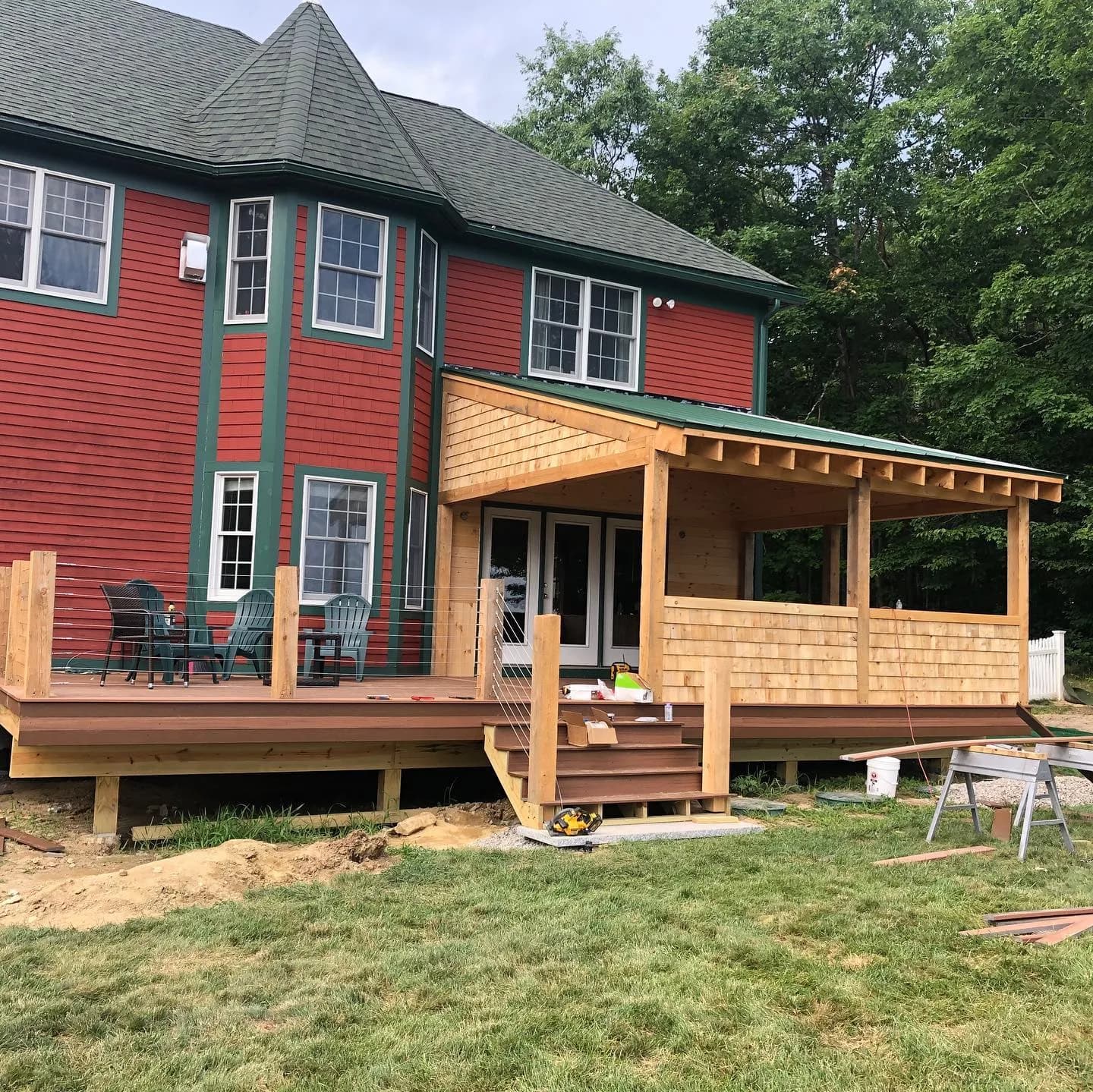
Red home with deck
Central NH
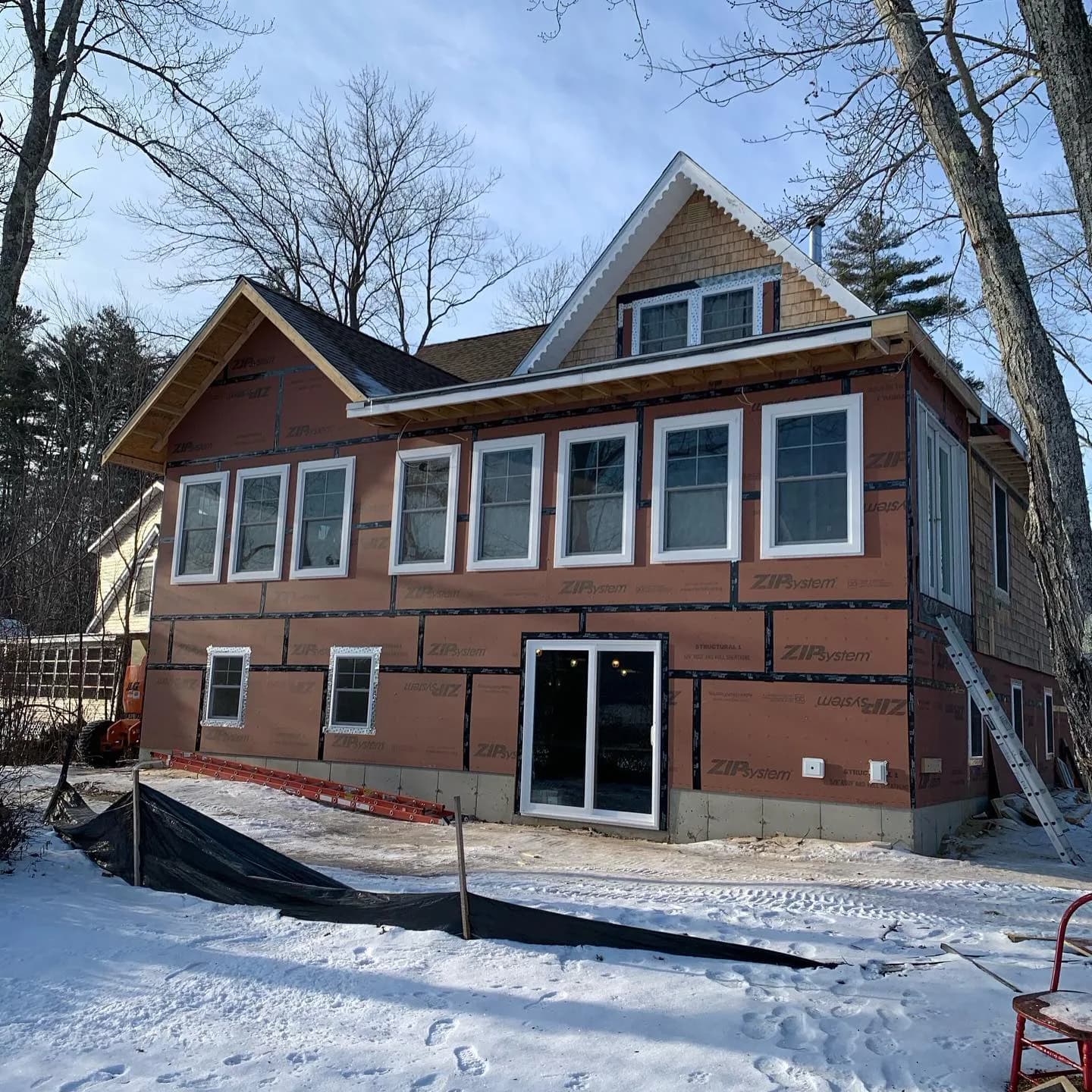
Gray home exterior
Lakes Region, NH
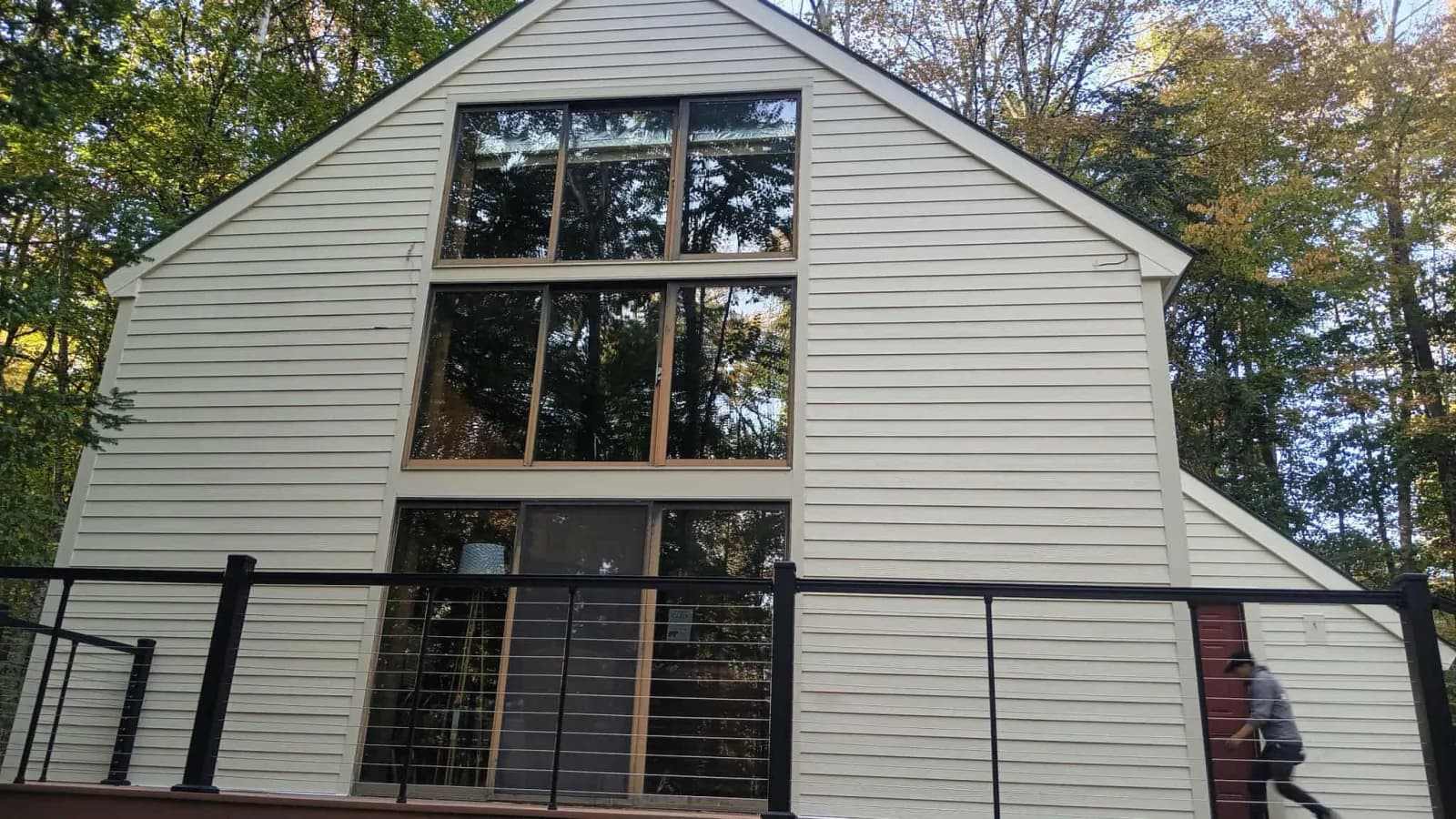
Modern board-and-batten exterior
Lakes Region, NH
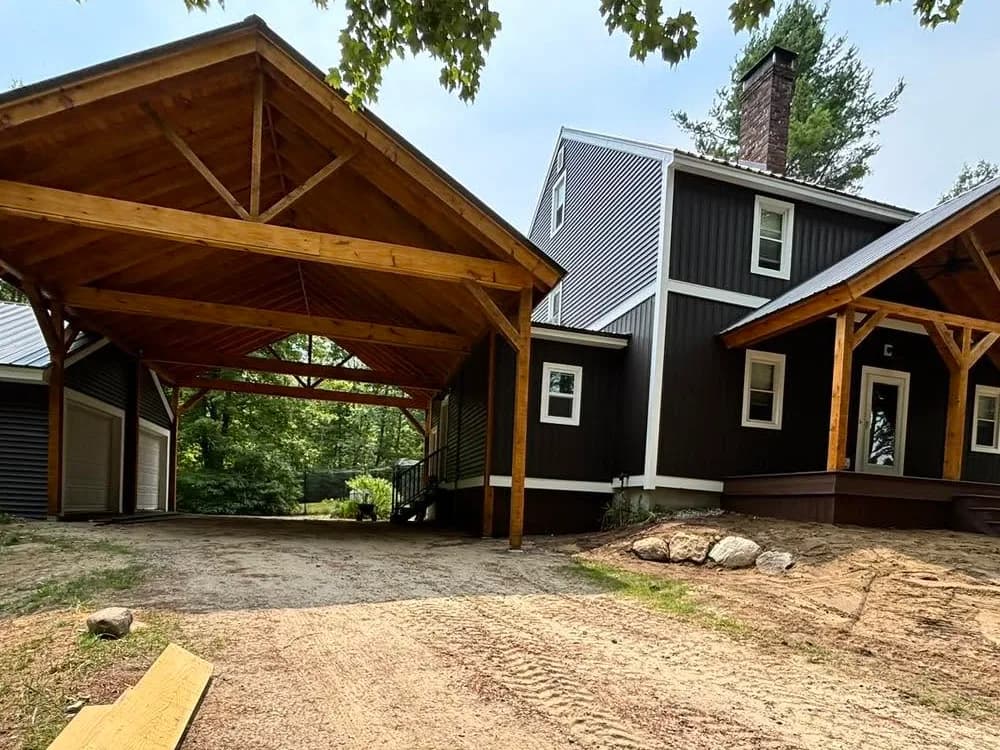
Black board-and-batten and Monogram exterior
Campton, NH
Siding town by town
- Siding in Laconia, NH
- Siding in Gilford, NH
- Siding in Meredith, NH
- Siding in Belmont, NH
- Siding in Franklin, NH
- Siding in Northfield, NH
- Siding in Concord, NH
- Siding in Bow, NH
- Siding in Pembroke, NH
- Siding in Hopkinton, NH
- Siding in Henniker, NH
- Siding in Warner, NH
- Siding in Dunbarton, NH
- Siding in Manchester, NH
- Siding in Nashua, NH
- Siding in Bedford, NH
- Siding in Derry, NH
- Siding in Londonderry, NH
- Siding in Salem, NH
- Siding in Hudson, NH
- Siding in Merrimack, NH
- Siding in Dover, NH
- Siding in Rochester, NH
- Siding in Portsmouth, NH
Siding — Frequently Asked Questions
For most NH homes, the choice comes down to vinyl or fiber cement (we install CertainTeed). Vinyl handles freeze-thaw well, doesn't rot, and requires almost no maintenance — good quality vinyl like CertainTeed's Cedarboards profile lasts 25–40 years in NH. Insulated vinyl adds R-value and is worth considering for homes with minimal wall insulation. Fiber cement is the premium option: it's dimensionally stable in cold weather, fire resistant, and paintable, but it costs more and needs repainting every 5–10 years. For most central NH homes, we recommend vinyl. For lake homes or historic homes where appearance matters more, fiber cement is worth the investment.
Vinyl runs $5–9 per square foot installed and fiber cement runs $10–18 per square foot; cedar and premium profiles run $16–24 per square foot. Most NH homes carry 1,500–2,500 square feet of siding area, and where yours falls in that spread moves the total more than the material does. Trim, corner boards, soffit and fascia are part of that, and so is stripping to the sheathing and installing new house wrap — siding over failing wrap is where shortcuts hurt homeowners. Rotted sheathing is the main thing that adds cost; we document it with photos and give you the repair price before adding it to the project.
Repair makes sense for isolated damage — a section that took a hit, a few warped boards after a storm. Replacement is the right call when you're seeing widespread warping or buckling, cracking across multiple walls, moisture getting in behind the boards (usually shows up as interior wall staining or higher energy bills), visible rot in more than 15–20% of the surface, or when the cosmetic condition is poor site-wide. The main risk of patching over systemic problems is moisture: once water is getting behind siding consistently, it's damaging the structure. If you're not sure, we'll come look at it and give you an honest assessment.
Quality vinyl siding — mid-grade or better — lasts 25–40 years in NH. The main threats to vinyl longevity here are impact damage (hail, ladders, branches) and UV fade, which affects lower-end products faster. Insulated vinyl tends to hold up slightly better because the foam backing prevents the panels from flexing as much during freeze-thaw cycles. CertainTeed and similar premium lines come with 50-year limited warranties. Budget vinyl from big-box stores is typically rated for 15–20 years and doesn't perform as well in cold climates.
We can install vinyl siding in winter with some precautions — vinyl becomes less flexible in very cold temperatures, so we're careful about handling and cutting. Installation is generally not recommended below 20°F. Fiber cement can be installed year-round with proper joint sealing. We schedule winter work around weather windows and won't rush a job in conditions that would compromise the installation.
It can, especially if your current siding has no insulation behind it. Insulated vinyl siding adds R-3 to R-5 of continuous exterior insulation, which reduces thermal bridging through the wall studs — a real factor in NH winters. We also install a house wrap (weather-resistive barrier) on every full siding job, which cuts air infiltration. The energy savings alone rarely pay for the siding, but if you're replacing failing siding anyway, upgrading to insulated vinyl or adding rigid foam underneath is a worthwhile improvement while the walls are open.
Yes. On every full siding replacement we strip the old siding down to the sheathing, inspect for rot and moisture damage, and install new house wrap before the new siding goes on. This is where shortcuts hurt homeowners — siding over old, failing wrap (or no wrap at all) traps moisture against the structure. If we find rotted sheathing, we document it with photos and give you the repair cost before adding it to the project. NH's freeze-thaw climate makes a proper weather barrier essential, not optional.
Yes — a siding job that leaves old, mismatched trim looks unfinished, so we handle the full exterior envelope. We replace or wrap corner boards, window and door trim, soffits, and fascia to match the new siding, typically in aluminum or PVC that won't rot. Seamless aluminum soffit and fascia also improves attic ventilation and keeps pests out. We'll walk the whole exterior with you and lay out exactly what's included in the written estimate.
Ready to Start Your Project?
Get your free estimate today — no obligation, no pressure. Most estimates are scheduled within the week.